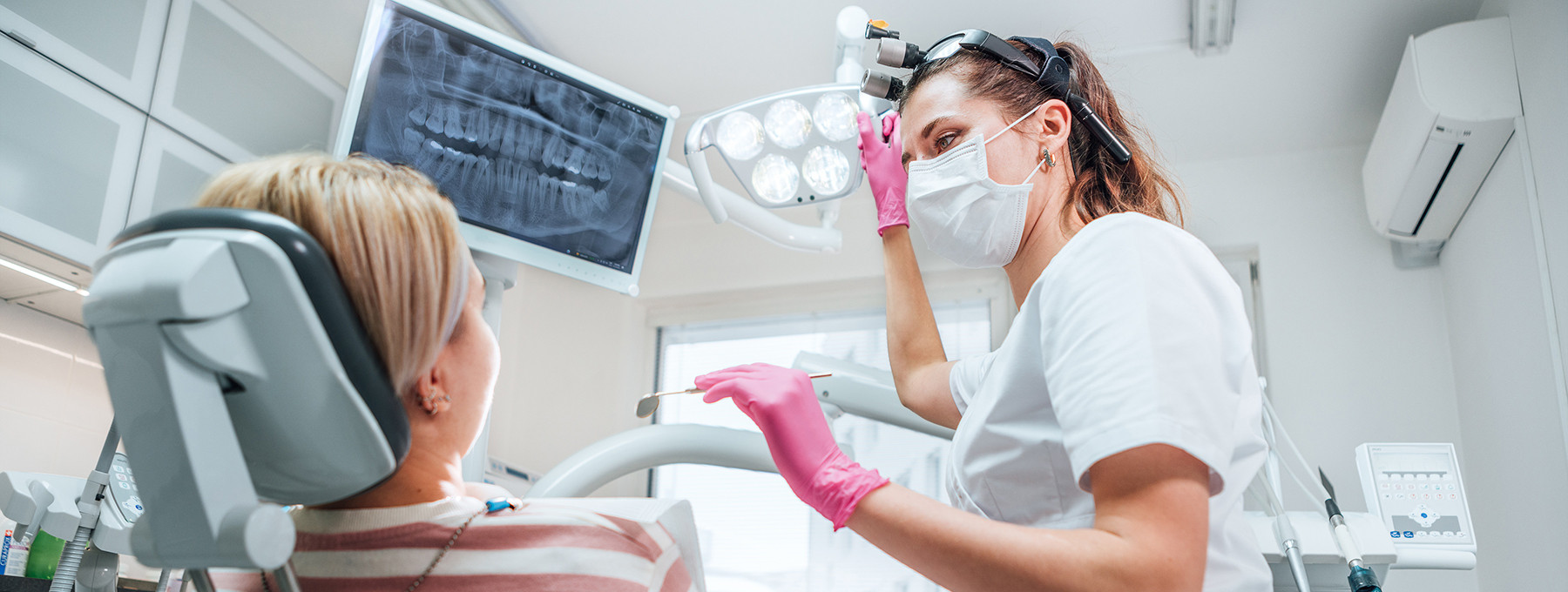
Dental Hygienist

Also see a sample 4-year plan.

Dental Hygienists Occupational Outlook

    Becoming a dental hygienist is a well-defined and rewarding career path in preventive oral healthcare. Dental hygienists play a vital role in helping patients maintain good oral hygiene, detect early signs of dental issues, and promote overall health. 

    Dental hygienists are licensed healthcare professionals who work alongside dentists to provide preventive and therapeutic dental care. The key responsibilities of the job include:

    • Performing oral cleanings
    • Taking and processing dental X-rays
    • Conducting oral health assessments
    • Applying fluoride and sealants
    • Educating patients on proper oral hygiene techniques
    • Documenting patient care and treatment plans
    • Assisting in detecting oral diseases (e.g., cavities, gingivitis)

    Dental hygienists are not dental assistants. They are licensed professionals with greater autonomy and responsibility, especially in patient education and preventive care.

    The pathway to becoming a Dental Hygienist includes:

    • Graduating from high school with a focus on science and health
    • Completing prerequisites for a dental hygiene program
    • Applying to and completing an accredited dental hygiene program (associate or bachelor’s degree)
    • Passing the National Board Dental Hygiene Examination (NBDHE)
    • Passing a state or regional clinical board exam (e.g., ADEX/CITA)
    • Applying for state licensure
    • Maintaining licensure through continuing education

    There are two main routes to becoming a dental hygienist:

    1. Associate Degree in Dental Hygiene (2–3 years) – Most common entry point; prepares you for licensure
    2. Bachelor’s Degree in Dental Hygiene (4 years) – Offers additional training and opportunities in public health, education, or administration. Increasingly preferred

    Courses:

    • Biology w/lab
    • Microbiology
    • Anatomy & Physiology I and II
    • General Chemistry
    • Nutrition
    • English Composition
    • Intro to Psychology
    • Intro to Sociology
    • Speech/Public Speaking
    • Medical Terminology (sometimes)
    • Mathematics (College Algebra or Statistics)

    Always check individual program requirements.

    GPA:

    • Minimum GPA: Usually 2.5–3.0
    • Competitive GPA: 3.4+
    • Strong performance in science prerequisites is particularly important.
    • Repeated coursework may be considered less favorably.

    Additional Requirements:

    • Get CPR certified early (American Heart Association recommended)
    • Join pre-dental hygiene clubs or local ADHA student chapters
    • Attend info sessions for dental hygiene schools
    • Consider becoming a dental assistant part-time for hands-on experience
    • Apply early – many programs are competitive and selective

    Not all dental hygiene programs require an entrance exam, but if they do, it’s typically one of the following:

    • ACT/SAT – Often optional or required if applying directly out of high school
    • HESI A2 or TEAS (Test of Essential Academic Skills) – Used to assess science, math, reading, and critical thinking

    Be sure to check the requirements of your target programs.

    • Shadowing a dental hygienist (20–40 hours minimum)
    • Volunteer work or part-time dental assisting experience
    • Strong letters of recommendation (typically from a professor and a dental professional)
    • Personal Statement – Why you want to become a dental hygienist
    • CPR certification – Usually required before clinical coursework begins

    Strong Dental Hygiene Programs in the Southeast U.S.:

    • University of North Carolina at Chapel Hill
    • Augusta University
    • Eastern Florida State College
    • University of Tennessee Health Science Center
    • Florida State College at Jacksonville
    • Clayton State University