|
Winthrop History
Since
its birth as the Winthrop Training School in 1886, Winthrop
University has built a proud tradition of serving South Carolina
and its citizens. Its foundation reflected the need for teacher
training as the state struggled to expand the public school
system in the aftermath of the Civil War.
David Bancroft Johnson, a gifted educator who was then
superintendent of the Columbia, S.C., schools, was acutely aware
of the power of education to help rebuild the South and also of
the scarcity of well-trained teachers.
Johnson was convinced that an institution with the express
purpose of preparing young women to educate children for the
next century was necessary and would be of value to the state.
He told state leaders, “The child of today is the man and woman
of tomorrow. They are the greatest asset of the State. Are they
not worth all our gold and silver and lands, if necessary, to
expend all for their preparation for this life and the life to
come?”
Johnson’s conviction led him to seek and secure the seed money
to establish the institution. The $1,500 initial contribution of
Massachusetts philanthropist and chair of the Peabody Fund,
Robert C. Winthrop, was enough to open the doors of the Winthrop
Training School in a borrowed one-room building in Columbia.
The 21 young women who gathered there 100 years ago were in the
vanguard of the public education movement, inspiring generations
of future teachers. Over time, there were additional
achievements brought about by hard work. Winthrop grew to be
regarded as one of the premier women’s colleges in the region.
It expanded its mission to become a multipurpose institution
offering degrees in an ever-growing variety of disciplines.
Winthrop remained at the forefront of educational innovation and
reached important milestones along the way. The institution
diversified its class ranks by extending its educational
offerings to minorities in 1964 and to men in 1972. It attained
university status in 1992.
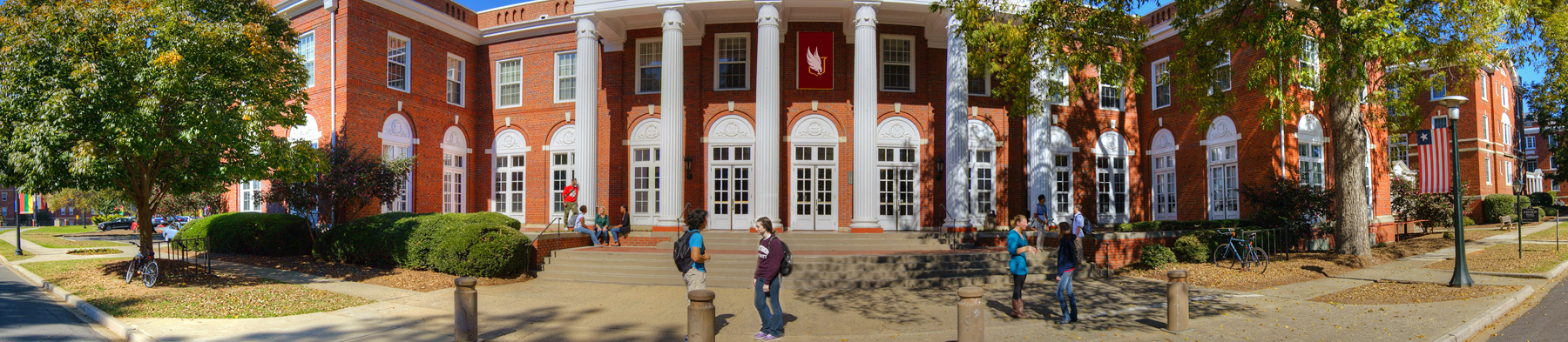
Winthrop has changed considerably since moving to its permanent
Rock Hill home in 1895, growing from a single classroom to a
comprehensive learning university of distinction. Winthrop’s
total acreage now includes a historic, traditional central
campus plus recreational east campus and growing west campus.
Today, nearly 6,500 students take courses in
arts and sciences,
education,
business administration
and visual and performing
arts, all of which are supported by Winthrop’s newest
academic division,
University College. What has not changed is a commitment to
service, excellence, community and diversity that now
characterizes the Winthrop experience.
|